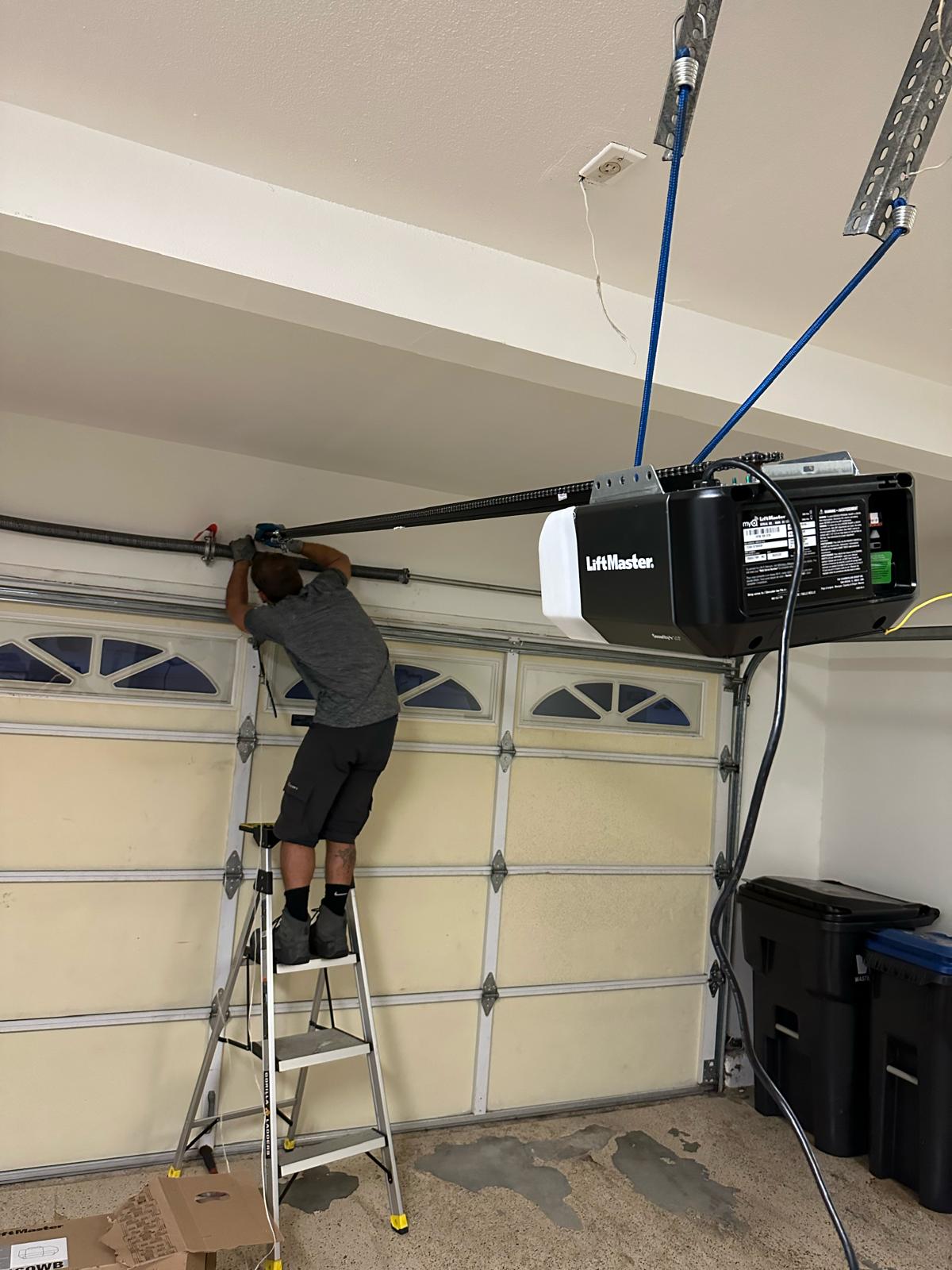
It happens at 6 a.m., right when the neighborhood is still quiet: that loud grinding, squealing, or banging as you back out of the driveway. A noisy garage door is one of the most common complaints we hear from Long Beach homeowners — and while it's easy to tune it out, the sound is almost always telling you something important.
The good news: most causes of a noisy garage door are fixable, and some you can handle yourself in under 20 minutes. This guide breaks down the 7 most likely culprits, how to tell which one you're dealing with, and what to do about it.
The 7 Most Common Causes of a Noisy Garage Door
1. Worn or Dry Rollers
Rollers are the small wheels that run inside the vertical and curved tracks on each side of your garage door. Most residential doors have 10–12 rollers. When they're new, they spin smoothly and quietly. Over time — especially in coastal environments like Long Beach where salt air accelerates wear — the bearings inside the rollers dry out, crack, or wear down completely.
Worn rollers are one of the most common sources of a grinding or rumbling noise. If you look at the rollers while the door is open and they look cracked, chipped, or visibly flattened on one side, they're overdue for replacement. Steel rollers are noisier by nature; swapping them for nylon rollers with sealed bearings is a simple upgrade that makes a dramatic difference in noise.
2. Loose Hardware — Bolts, Nuts, and Hinges
A garage door opens and closes roughly 1,500 times per year. All that vibration gradually loosens the bolts, nuts, and screws that hold the hinges, brackets, and track supports in place. When hardware becomes loose, panels rattle against each other, tracks vibrate against the wall, and the whole door assembly can sound like it's falling apart — even when the actual components are fine.
This is the easiest fix on the list. Grab a socket wrench and systematically tighten every visible bolt and nut on the track hardware, hinge plates, and cable drums. Do not overtighten — snug is enough. One pass around the door can eliminate a surprising amount of racket.
3. Needs Lubrication
Metal moving against metal without lubrication creates squeaking, scraping, and grinding sounds. Garage doors have multiple metal-on-metal contact points: rollers in tracks, hinge pins turning inside hinge plates, the torsion spring coil winding, and the cable moving over pulleys. When any of these dry out, they get loud.
Use a silicone-based spray lubricant or white lithium grease — not WD-40, which is a degreaser and will actually strip the lubrication you want. Spray the rollers, all hinge pins, the spring coils, and the top 12 inches of the track (where the rollers curve). Avoid lubricating inside the main vertical track sections — that's where your door needs friction to stay in place. Lubricate every six months as standard maintenance.
4. Worn or Damaged Springs
Your garage door's torsion springs (the large spring mounted above the door on a steel rod) or extension springs (the springs running along the upper horizontal tracks) do the heavy lifting — literally. They counterbalance the weight of the door so the opener only has to do a small fraction of the work.
When a spring is wearing out, it may create a popping or creaking sound as it struggles with tension. A spring that has lost tension will cause the opener to work harder, making the whole system louder. And if a torsion spring has a small crack forming, you may hear a sharp snapping sound during operation — a warning that a full break is coming.
Spring problems should never be DIY'd. Torsion springs are under hundreds of pounds of tension and can cause severe injury if they release uncontrolled. If you suspect your springs are the source of the noise, have a technician inspect them. See our full guide to garage door spring replacement in Long Beach for what to expect.
5. Misaligned or Bent Track
The steel tracks that guide your door need to be perfectly vertical on the sides and correctly angled on the horizontal sections. If a track gets dented from being bumped by a car, or if the mounting brackets loosen over time and let the track shift, the rollers can't run smoothly. Instead, they scrape and grind against the inside of the track at every cycle.
You can often spot a track problem by looking at the gap between the roller and the track edge — it should be even along the entire length. If you see a section where the roller is pinched against one side, or you can see a visible dent or kink in the track, that's your culprit. Minor bends can sometimes be tapped back into alignment with a rubber mallet and a block of wood, but significant damage requires professional track replacement.
6. Worn Opener Drive System
The opener itself can be the source of noise, independent of the door hardware. The three most common opener drive systems each have a distinct sound profile when they wear out. Chain drives develop a loud rattling and slapping sound when the chain stretches and sags. Screw drives create a grinding noise as the lubrication in the screw channel depletes. Belt drives are quietest but can develop a squealing sound if the belt stretches and begins slipping on the pulleys.
If the noise seems to come from the ceiling unit rather than the door itself, the opener drive is likely the issue. In many cases, adjusting chain tension or re-lubricating the drive resolves it. Older openers may need the drive assembly replaced entirely. Our team handles all major brands — learn more about garage door opener repair in Long Beach.
7. Unbalanced Door
An unbalanced garage door puts uneven stress on every component in the system — the springs, cables, rollers, and opener — and creates a range of noises as each component compensates for the imbalance. You can do a simple balance test yourself: disconnect the opener (pull the red emergency release cord), then manually lift the door to waist height and let go. A balanced door will stay in place. A door that drops immediately is heavy (spring tension is too low); a door that rises is light (spring tension is too high).
Adjusting spring tension to restore balance is a job for a professional. The cables and drums that attach to the springs are also under significant tension and are easy to damage if you don't know what you're doing.
What Type of Noise Is It? A Quick Diagnosis Guide
Different sounds point to different problems. Use this table to narrow down the cause before you start troubleshooting:
| Noise Type | Most Likely Cause | DIY Fix? |
|---|---|---|
| Grinding / Rumbling | Worn rollers, bent track, or dry drive system | Try lubrication first; replace rollers if worn |
| Squeaking / Squealing | Metal-on-metal friction — needs lubrication | Yes — lubricate hinges, rollers, springs |
| Rattling | Loose hardware (bolts, nuts, brackets) | Yes — tighten all hardware with a socket wrench |
| Banging / Loud Pop | Broken or failing spring; misaligned sections | No — call a technician immediately |
| Popping / Creaking | Worn spring under tension, or temperature expansion | Lubricate first; have springs inspected if it persists |
| Chain Slap (overhead) | Stretched or sagging opener chain | Maybe — chain tension adjustment (opener manual required) |
| Vibration Through Walls | Opener vibration transmitted via rigid mount | Yes — add rubber anti-vibration pads to opener mount |
Which Fixes Can You DIY?
A socket wrench and 20 minutes is all you need. Go around the entire door and tighten every bolt and nut you can reach. Check the track mounting brackets, hinge plates, and spring anchor brackets. This costs nothing and is completely safe.
Buy a can of silicone spray or white lithium grease from any hardware store ($6–$10). Spray the rollers, all hinge pivot points, the spring coils, and the cable where it runs over the pulley. This is the single highest-ROI maintenance task for a noisy garage door.
Nylon roller replacement is feasible for a handy homeowner on the middle rollers. The bottom rollers (attached to the door cables) and the top rollers (inside the horizontal track) require more disassembly and are safer left to a technician. If you're comfortable with basic tools, middle roller replacement is a reasonable DIY project.
Springs and cables are under enormous tension. A single mistake can result in the spring snapping at high speed or the cable slipping and the door crashing down. Track realignment requires specialized tools to get right. And opener drive adjustment can void the warranty if done incorrectly. These are jobs for a licensed technician.
When to Call a Professional
Some noise problems are simple maintenance issues. Others are signs that something is about to fail — and ignoring them can turn a $100 repair into a $600 emergency. Call a professional if you notice any of the following:
- The noise appeared suddenly after years of quiet operation — sudden changes often mean a specific component has just failed or is on the verge of failing.
- The door is moving unevenly — jerking, jumping, or moving faster on one side than the other. This is a safety hazard, not just a noise issue.
- You heard a loud bang or pop from the garage — this is the classic sound of a torsion spring snapping. Do not attempt to operate the door until the spring is replaced.
- The opener is struggling or reversing — if the motor is working noticeably harder or the door reverses before fully opening or closing, there's likely a spring or balance problem.
- You can see a visible gap in the spring — a torsion spring with a separation in the coil has broken and must be replaced before the door is used again.
- The noise has gotten progressively worse over several weeks despite lubrication and hardware tightening — progressive deterioration means a component is failing, and delaying repair only increases the damage.
For issues that can't wait — a broken spring, a door stuck open, a door off its tracks — we offer 24/7 emergency garage door repair in Long Beach with typical response times of 30–60 minutes.
- A noisy garage door is usually an early warning — don't tune it out. Most noise problems worsen over time and become more expensive to fix.
- Tightening hardware and lubricating moving parts are safe, free DIY tasks that eliminate most squeaks and rattles in under 30 minutes.
- Grinding noise most often points to worn rollers; swapping steel rollers for sealed nylon rollers is one of the best noise-reduction upgrades available.
- A sudden loud bang or pop is a broken spring — stop using the door and call a technician. Springs under tension are genuinely dangerous.
- If noise persists after lubrication and tightening, or if the door moves unevenly, schedule a professional inspection before the problem escalates.
Frequently Asked Questions
Ready to Finally Fix That Noisy Garage Door?
A grinding, squeaking, rattling, or banging garage door doesn't have to be your new normal. Most noise issues are fixable — and fixing them early prevents small problems from becoming expensive ones. Start with the free fixes: tighten the hardware and lubricate the moving parts. If the noise persists, or if you hear any sudden banging or popping, it's time to have a professional take a look.
Dean's Garage Door has been serving Long Beach homeowners for years with honest, upfront pricing and same-day service. We'll diagnose the noise, tell you exactly what's causing it, and give you a flat-rate price before we touch anything. No surprises. For a complete overview of repair costs in the area, see our Long Beach garage door repair cost guide. To speak with someone right now, visit our homepage or call directly.