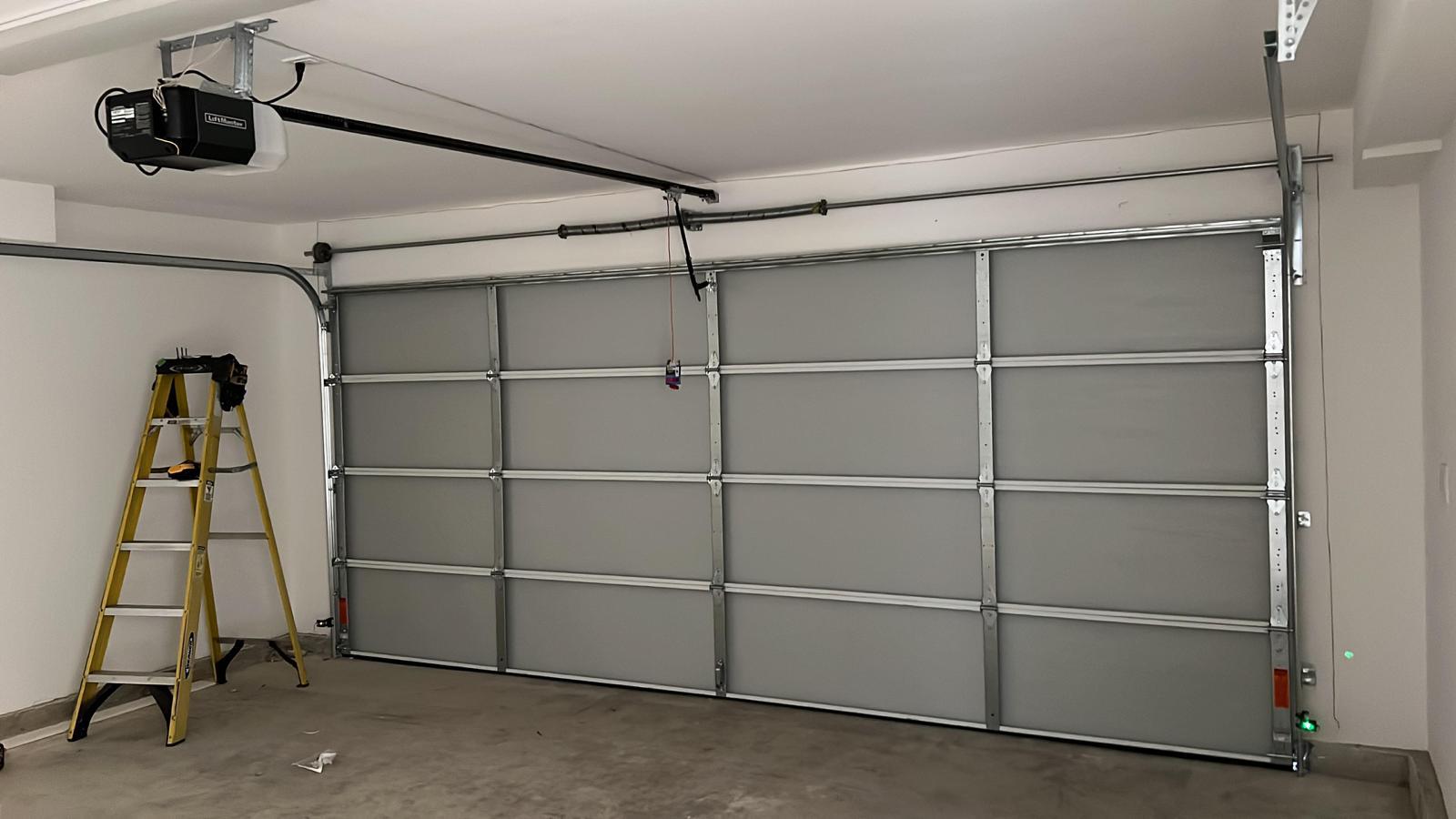
Knowing how to lubricate a garage door is one of the cheapest ways to protect one of the most-used mechanisms in your home. A door that gets a proper lube routine every six months runs quieter, lasts longer, and rarely surprises you with a $180–$350 spring replacement or a $220 roller swap. If you live anywhere near the coast — Long Beach, Seal Beach, Signal Hill — salt air makes this maintenance task even more critical. Chloride-laden air accelerates corrosion on springs, hinges, and rollers faster than it would in an inland climate.
In this guide you'll learn exactly what products to use (and which to avoid), which parts to lubricate, which to skip, and how to run through the full 6-step routine in under 20 minutes.
What You'll Need
The right product makes all the difference. Two sprays handle the whole job:
Use this on springs, hinges, and rollers. Brands like WD-40 Specialist White Lithium Grease, Permatex 80345, or CRC White Lithium all work well. It clings to metal under load, resists wash-off, and stays effective in coastal humidity. A 10 oz can costs about $7–$10 and lasts multiple service cycles.
Use this on weatherstripping, the bottom door seal, and the plastic bearing plates on torsion springs. Silicone won't degrade rubber or vinyl. 3-IN-ONE Professional Silicone Lubricant or DuPont Teflon Silicone are reliable picks.
This is the most common mistake. The original WD-40 is a water-displacement solvent and degreaser, not a lubricant. It will temporarily quiet a noisy door, but within days it evaporates, strips existing grease, and leaves metal parts dry and more vulnerable to rust than before. If you've already used it, clean the area with a dry rag before applying white lithium grease.
Heavy grease attracts and traps dust, sand, and debris. In Long Beach, where coastal dust and fine grit are constant, thick lubricants quickly turn into an abrasive paste that accelerates wear rather than preventing it.
You'll also want a stepladder to reach the torsion spring bar above the door, a dry rag or paper towels, and basic safety glasses. That's it — no special tools required.
Step-by-Step: How to Lubricate a Garage Door
Work your way from top to bottom. The whole process takes 15–20 minutes for a standard single or double door.
Open the Door and Disconnect Power to the Opener
Raise the door to full open position — this puts the torsion spring in its least-tense state (wound down) and gives you the best access to hinges and rollers. Unplug the opener from the ceiling outlet, or pull the red emergency release cord to disconnect the trolley from the drive. You don't want the opener activating while your hands are near moving parts.
Clean the Tracks — Do NOT Lubricate Them
Wipe the inside surface of both vertical and horizontal tracks with a damp rag, then dry thoroughly. Remove any built-up dirt, old grease, or debris. The tracks must be clean for the rollers to grip correctly. Repeat: do not spray lubricant on the tracks. Lubricant on track surfaces collects grit and causes the rollers to slip or chatter. If your tracks are visibly bent or misaligned, that's a separate issue — see our repair cost guide or call us for an inspection.
Lubricate the Torsion Spring
Hold your white lithium grease can about 2 inches from the torsion spring coils and spray along the entire length of the spring — both springs if you have a double-door setup. The grease should work into the spaces between the coils. Don't over-apply; a light, even coat is enough. The spring should look uniformly shiny, not dripping. Proper spring lubrication reduces the metal-on-metal friction that wears down the wire over time and helps extend spring life well beyond the standard 10,000-cycle rating. In Long Beach's salt air, unlubricated springs can show surface rust within a single season.
Lubricate the Hinges and Rollers
Apply white lithium grease to the pivot points of each hinge — not the hinge plate, just the pin where the two halves meet. For rollers, spray directly into the small ball-bearing housing at the center of each roller wheel. If you have steel rollers, lubricate the bearing housing and also the stem where it meets the hinge. Nylon rollers with sealed bearings generally don't need lubrication — but the hinges they're attached to still do. A standard door has 10–12 hinges and rollers total; don't skip any. This is also a good time to check for cracked or chipped rollers, which should be replaced rather than lubricated.
Lubricate the Opener Drive Mechanism
The right lubricant here depends on your opener type. Chain-drive openers (the most common type, with a metal chain like a bicycle): apply white lithium grease lightly along the chain's full length. Screw-drive openers: apply white lithium grease along the threaded metal screw rod from end to end. Belt-drive openers: the rubber belt itself does not need lubrication, but you can lightly lubricate the trolley rail. Check your opener's manual for manufacturer guidance. If your opener is a LiftMaster model — common in Long Beach — Chamberlain's own garage door lubricant (part #KIT1-LUB) is a solid choice and won't void your warranty.
Test the Door and Wipe Excess
Reconnect the opener, close the door, and run it through two full open-close cycles. Listen for any remaining squeaking — if a specific hinge or roller is still noisy, apply a second coat directly to that point. After the test cycles, open the door again and wipe any excess lubricant that has dripped onto the door panels or the floor. Grease on painted surfaces can stain. The door should now run noticeably smoother and quieter than before.
What NOT to Lubricate
As important as knowing where to apply lubricant is knowing where to keep it away:
- The tracks: Already covered above — this is the most common mistake. Clean only.
- The bottom seal (door sweep): This rubber seal at the base of the door needs to stay flexible and grippy to create a weather barrier. Use silicone spray only — never grease. Grease will cause the seal to collect dirt and may cause it to stick to the floor, which tears the seal over time.
- Torsion cable drums: The steel cables that wind around the drums are under enormous tension. Do not lubricate them yourself — if a cable is frayed, kinked, or loose, that's a job for a professional, not a lube job.
- The outside of the torsion bar (shaft): The bar itself doesn't need lubrication; only the spring coils and the bearing plates at each end do.
How Often Should You Lubricate a Garage Door?
For most California homes, a twice-yearly routine — spring and fall — is enough to keep wear in check. Set a reminder alongside your smoke detector battery check.
If you live within about 5 miles of the Pacific Ocean — which covers much of Long Beach, Belmont Shore, Naples, and Signal Hill — salt air is hard on metal hardware year-round. In coastal zones, quarterly lubrication (every 3–4 months) is a smarter cadence. The signs that you're overdue: squeaking or grinding on movement, visible surface rust on the spring coils, or rollers that leave a brown-orange residue on the track walls.
Heavy-use households (a family that opens and closes the door 8–12 times daily) will also wear through lubricant faster than the average 4–6 cycles per day. If your door gets heavy use, lean toward the shorter maintenance interval.
When Lubrication Isn't Enough
Lubrication solves friction-related noise and wear — it doesn't fix structural or mechanical problems. If you've run through the full routine and your door is still loud, slow, or uneven, the issue is likely one of the following:
- Worn or chipped rollers: Nylon rollers have a lifespan of 7–10 years. When the wheels crack or the bearings seize, no amount of grease will help — they need to be replaced. This is a relatively inexpensive repair.
- Worn or unbalanced torsion springs: A door that drifts down when released halfway, or feels unusually heavy when lifted manually, has a spring that's lost tension. Lubrication won't restore tension — the spring needs to be replaced. In Long Beach, standard torsion spring replacement runs $180–$350.
- Bent or misaligned tracks: A door that binds, reverses unexpectedly, or gaps unevenly at the sides likely has a track alignment issue. This requires physical adjustment, not lubrication.
- Loose hardware: Check all hinge bolts, roller stems, and track mounting bolts with a socket wrench. Vibration over years of use loosens fasteners, and a loose hinge can cause noise that mimics a lubrication problem.
If any of these issues sound familiar, call Dean's Garage Door at (562) 254-0083 for a diagnostic visit. We'll tell you exactly what's needed and what it will cost upfront — no surprises.
Key Takeaways
- Use white lithium grease on springs, hinges, and rollers — never WD-40 (original formula), which strips lubrication and accelerates rust.
- Clean tracks but never lubricate them — grease on tracks traps debris and causes rollers to skip.
- Lubricate every 6 months; in Long Beach's coastal salt air, every 3–4 months is better practice.
- If the door is still noisy after lubrication, suspect worn rollers, a weak spring, or loose hardware — not a lack of grease.
- The torsion spring, hinges, rollers, and opener drive are the four points that matter most — a complete routine takes under 20 minutes.
Frequently Asked Questions
Ready to Call a Pro?
A consistent lubrication routine is the single best thing you can do to extend the life of your garage door hardware. Most Long Beach homeowners who maintain their doors properly get 10–15 years out of torsion springs instead of 7–8, and rollers that last a decade instead of five years. That's real money saved on preventable repairs.
But if lubrication isn't solving your problem — or if you notice a cracked roller, visible rust pitting on the spring coils, frayed cables, or a door that won't balance — those are signs of wear that need a professional diagnosis. Dean's Garage Door serves Long Beach and all surrounding communities with same-day service, upfront flat-rate pricing, and no hidden fees.
See also: Garage Door Spring Replacement in Long Beach · Garage Door Repair Cost Guide · Dean's Garage Door — Home